Can the Inheritance Tax process be simplified?

Can the Inheritance tax process be simplified?

The Office of Tax Simplification (YES, there is such a thing!) have published their first report on Inheritance Tax, looking at the views and experiences of over 3,500 participants.

Some key findings of the report show:

Where people were not using an Adviser to assist with the probate process, the executors were spending in excess of 50 hours on administration of the Estate.

  • Participants stated that ‘obtaining Probate’ and ‘completion of the relevant forms’ were the “most time-consuming” tasks in administering the Estate.
  • Concerns were raised over submission of Inheritance Tax forms even where no Inheritance Tax is payable.
  • 65% of participants stated that they “still had to provide significant amounts of information” in relation to the Estate regardless of whether Inheritance Tax was payable or not.
Simplifying_Inheritance_Tax

In the tax year 2015-2016, Inheritance was payable on only 24,500 Estates, however, 275,000 Inheritance Tax forms were completed and returned to HMRC. Thus showing that even where the Estate may seem small and simple, forms may still cause complications.

The key recommendation from the Office of Tax Simplification, following this report is:

“The government should implement a fully integrated digital system for Inheritance Tax, ideally including the ability to complete and submit a probate application.”

This seems an ideal solution, in principle, however this is a large, not to mention expensive and time-consuming, task to achieve. A digital system for the whole process could allow for a speedier and much more simple procedure for the whole process from obtaining probate through to reporting on the Estate and payment of correct Inheritance Tax where applicable.

However, we will wait to see for such action to be taken and for now work with the system as it is.

If you would like to have a free chat about Probate or administration of someone’s Estate, please contact us on  info@TotalLegacyCare.co.uk or 01727 865 121

Leah Waller

Got a Question or want to book a FREE Consultation?

Where should I keep my Will?

Where should I keep my Will?

So, you have taken the important step to make your Will but what should you do with it now?

Your Will is extremely important as it sets out, to those that you have left in charge (your Executors), exactly what should happen, upon your death, to your Estate – your money, property and possessions. 

If you do not have a Will then your Estate is passed on in accordance with the Rules of Intestacy, this may not be how you had intended, or would have wanted.

If your Will cannot be located upon your death then your Executors, or the Administrators of your Estate will have to deal with your Estate as though you had not made a Will.

Your original Will is the only legally binding document that will be accepted by the Probate Registry in order that your chosen Executors can distribute your Estate to those that you have chosen, in accordance with your wishes.

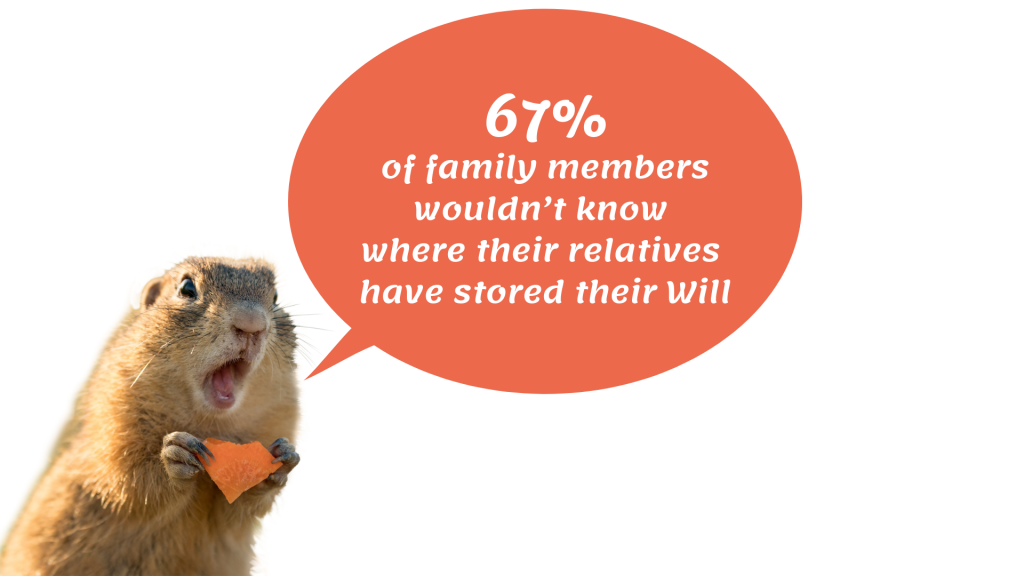
Many people choose to store their Will in their own home but recent research suggests that 67% of family members wouldn’t know where their relatives have stored their Will.

family_members_wouldn’t_know_where_their_relatives_have_stored_their_Will

Storing your Will at home also has the additional worry of ensuring that it is protected against any flood or fire risk as well as being taken, among other valuable possessions, in the event of a burglary.

Storing your Will in a secure location, and advising your Executors of this, is essential – especially after going to the effort of making a Will and getting all your wishes down!

If you would like to have a chat with us about storage options, please do. These are low cost and include the option to amend your Will, at no additional cost, whilst your Will is stored with us.

If you would like to have a free chat about your existing Will, making a new Will or storage of your Will, please contact us on info@TotalLegacyCare.co.uk or 01727 865 121

Leah Waller

Got a Question or want to book a FREE Consultation?

Valentine’s Day… What better gift to give your loved ones than peace of mind

Valentine's Day…

What better gift to give your loved ones than peace of mind

We are taking a little break from our weekly planning articles and checklists that are helping you to get all those important ‘grown-up’ jobs off of your to do list 😉 

This week we are talking about…Valentine’s Day.

So, hands up how many of us have forgotten to get our loved one a gift, or are at that stage where Valentine’s Day is just another day and gifts are a long distant memory?

Well, what about giving our loved one’s the gift of peace of mind?

What do we mean by peace of mind?

We set out below a couple of things that we know will help give you peace of mind as well as relieving the financial and emotional burden from your loved ones when the time comes:

  • Lasting Power of Attorney

Putting a Lasting Power of Attorney in place allows you to give the person you trust most the power and authority to make decision for you, in relation to you health & welfare and property & financial affairs, if you are unable to do so.

Giving your loved ones, as well as yourself, peace of mind that should anything happen and you are unable to make decisions (whether that be due to temporary or permanent loss of capacity or simply because you cannot be physically present where you are needed) that there is someone in place to take those decisions for you and make the decisions you would have, if you were able.

  • Will

Having a Will in place (and reviewing that Will!) will give you and your loved ones

peace of mind that when the worst happens all your wishes are written down and can be carried out as you intended.

  • Funeral Plan

Having a Funeral Plan in place means that you can not only take away the

financial burden from your loved ones by paying for your funeral in advance (whether in a lump sum or by instalments), you also remove the emotional burden as all your wishes will be written down and can be put into effect by the Funeral Director with minimal input from your loved ones at an already difficult time.

We have these in place as we understand just how important it is to be protected and we are more than happy to have a free chat with you too, no obligation – honestly!

If you would like to have a free chat about anything in this article, please contact us on  info@TotalLegacyCare.co.uk or 01727 865 121

Leah Waller

Happy Valentine's Day!

PLANNING…Checklist for Executors

PLANNING...

Checklist for Executors

This week we are focusing on Probate and the important role of Executors within the probate process.

So, let’s address a couple of questions first shall we…

What is probate?

Strictly speaking, Probate is proving the Will and showing that it is valid but many use the term to refer to the legal process following someone’s death. This is when someone with legal authority (the Executors, if there is a Will, or Administrators, if there is no Will) obtain a Grant of Probate or Letters of Administration, and can then collect in and distribute the Estate of the deceased.

Probate is usually required where an Estate (all the property, cash, savings, ISAs, investments and any other valuables) of the deceased have a combined total of £5,000 or more.

What is an Executor?

An Executor is appointed in your Will and is responsible for collecting in and protecting your estate, including any property and assets that you own, and carry out the distribution of such items in accordance with your wishes.

Now for the tough part…an Executor is legally responsible for everything that they do, or fail to do, when administering the Estate and they are financially liable for any loss that results as a breach of their duty, even if the breach was a mistake

To make things a little easier (as we know that being an Executor, although a privilege to be asked, can be a massive burden!) we have set out a brief checklist of some of the things that an Executor should consider first when dealing with probate:

  • Obtain the Death Certificate

As the Executor you will be responsible for notifying certain people, companies and authorities of the death and so the Death Certificate will be required.

  • Find the original Will

As the Executor you will need the Will in order to apply for Probate.

  • Applying for the Grant of Probate

This is the official document giving you authority to administer the Estate of the deceased, collect in and deal with their assets and then distribute them accordingly.

  • Collect in assets of the Estate

The Will and any accompanying documents that the deceased may have left may well give specific instructions as to what the deceased has and, importantly, where it can be located, however such specifics may not be given.

As the Executor you will need to ensure that you collect in and account for all of the deceased’s assets including property, stocks, shares, bank accounts, ISAs, personal items etc.

This will also include searching for any missing assets.

  • Put insurance in place

The Executor will be responsible for ensuring that relevant insurance is in place for the assets of the deceased until they can be distributed in accordance with the Will.

  • Complete Inheritance Tax Forms

The Executor is responsible for completing and submitting the Inheritance Tax Forms.

The Estate is responsible for paying the Inheritance Tax due on the Estate and the Executor is responsible for ensuring this happens.

  • Complete

The Executor is responsible for completing and submitting the necessary Income Tax and Capital Gains Tax returns and paying, from the Estate, any tax that is due.

  • Pay debts and liabilities

The Executor is not responsible for paying these personally however, the Executor is responsible for ensuring that any debts and liabilities, including funeral costs, are paid from the estate.

The Executor should also put a notice to debtors in the London Gazette.

  • Preparing Estate Accounts

The Executor is responsible for the preparation of Estate Accounts and ensuring that the Accounts are distributed to the relevant parties.

  • Distribution of the Estate to the Beneficiaries

The Executor will then be responsible for distributing the Estate assets, following the payment of all debts and taxes, in accordance with the deceased’s wishes as set out in their Will.

A detailed record of this, and all the steps taken by the Executor, should be kept throughout the process.

REMEMBER…You don’t have to do everything alone, ask for help as and when you need it!


You may need to ask for professional help from solicitors, probate specialists and/or tax advisers. If the estate is relatively small and doesn’t have any complexities, the Executor may well decide that they can carry out the process by themselves and this is also fine.


If you would like to have a free chat, please contact us on  info@TotalLegacyCare.co.uk or 01727 865 121

Leah Waller

Got a Question or want to book a FREE Consultation?

Why I put a Funeral Plan in place…

Why I put a Funeral Plan
in place...

This week, in an attempt to get planning the ‘grown-up’ things from the ever-growing to-do list, we are focusing on Funeral Plans. So, I thought it may be easier for me to share with you, why I have decided to put my Funeral Plan in place…

I’ve recently turned 40 and have no plans to go anywhere any time soon, but we never know when our time is up. I have two sons and adore them both equally, but they are still young and both, in the nicest way possible, useless at organising anything (if it’s not for their benefit ;))

When my time is up, one of my boys will need to take control and plan my funeral. There are so many considerations when arranging a funeral, such as:

  • which Funeral Directors to use?
  • burial or cremation?
  • location?
  • transport?
  • viewings of the body?
  • Religious or humanist service?
  • what hymns and/or songs would you like played?
  • order of service?
  • obituary / readings?
  • flowers?
  • charitable donations?

Not only is this quite overwhelming, it may well be the case that they are unaware of what my wishes are and why would they?

This is not a conversation that most of us have, especially with our children, so they may be left guessing at what I would have wanted and this could cause disagreements between them that could have lasting effects.

I don’t want to put that emotional burden on my boys

So, who pays for it all too?

“Surely we’ll just go to dad’s bank and get the money out from there?”

It may not be that simple. Depending on the bank they may not release any funds until probate has been carried out – this could take anywhere between 6-12 months. There also may not be enough money in my bank at the time, so how do they pay for it? My children, or a loved one will need to stump up the money themselves, and unfortunately, the cost of a funeral runs into the thousands (£££!!!) (with funeral costs having risen 122% since 2004! – Cost of Dying Report – 2018 ).

I don’t want to put that financial burden on my boys

So, this is why I put a funeral plan in place.

We are linked to one of the most reputable pre-paid funeral providers in the country, so I knew everything I needed to know already. I took the option of the low cost monthly instalments and I barely notice it coming out of my bank account. All my wishes are listed, including my preferred funeral director and now, when the time comes, all my sons need to do is make one phone call to activate the plan.

The plan is locked in at the price of when I took the plan out as the money I pay is invested in unit trusts and bonds and is guaranteed to cover the cost of the funeral directors services.

For me personally, it’s one of the most valuable services we provide as we often plan for the future with Life Insurance, Wills and planning for Inheritance Tax but when the time comes, the funeral is the first thing that needs to be sorted and paid for.

We offer free consultations, lots of free information in articles, FAQs and videos on our website, so if you would like to chat more about saving your loved ones form the emotional and financial burden, please do get in touch.

If you would like more information or to discuss putting a funeral plan in place, call us on 01727 865 121 or email us at info@TotalLegacyCare.co.uk for a free, relaxed and considerate discussion on how we can help

Neil Barras-Smith

Got a Question or want to book a FREE Consultation?

New year, new resolutions, new you? Let’s getting planning…

New year, new resolutions, new you?
Let’s getting planning...


So, it’s the start of the New Year and we’ve said goodbye to another that’s passed. Last year may have been good, it may have been troubled and you may not have got round to ticking everything off that to-do list or kept last year’s resolutions…


Each week, we will be writing an article around the “grown up stuff” that should be planned for with useful information and free advice as always to help you to plan for your family’s future and keep on track (don’t worry we will keep them short, to the point and add a little element of fun where we can!).


We will be looking at:


  1. Funeral planning

    1. How to save your loved ones the emotional burden; and

    2. How to save loved ones the financial burden


  1. Wills & Trusts

    1. Planning for Inheritance Tax;

    2. Ensuring your money goes where you want it to;

    3. Guardians for your children;and

    4. Protecting your property against unwanted costs and taxes.


  1. Lasting Power of Attorney

    1. What is it and why is it important? and

    2. Who to choose as your Attorneys


  1. Probate

    1. What is the process and why is it important?

    2. How to get the help you need at such a difficult time;

    3. Why IHT forms are so important to complete correctly; and

    4. What are you liable for as an Executor?


  1. Pensions and investments

    1. Do you know how your pensions are performing?

    2. Are your investments working in the way you want them to or could they be placed elsewhere?


In all of our articles we aim to give you the information that you need in a simple and easy to understand format, to help you to make the decisions that you want to.


It seems that there is never enough hours in the day but let’s start the year on a positive and MAKE TIME to plan and get some of these things in place and off of your to-do list.


Check out our website for lots of free information or contact us for a free meeting.

Neil Barras-Smith

Got a Question or want to book a FREE Consultation?

Will my Christmas Gifts attract Inheritance Tax?

Will my Christmas Gifts attract Inheritance Tax?

With Christmas fast approaching and the whole family getting in the Christmas spirit, should we be worried about the gift we give attracting Inheritance Tax?

Not a thought that would cross many of our minds during the festive period, but should it?

The tax conscious may well be considering the gifts given, not only during the festive period but, throughout the year to ensure that the recipients won’t be liable to pay Inheritance Tax on such gifts.

So, let’s have a look at what gifts can be given and why some gifts may well attract Inheritance Tax.

Smaller gifts of up to £250 can be given to individuals without attracting any Inheritance Tax and so if your gifts fall into this category and you are not giving more than one gift (or multiple gifts) of more than £250 to any one individual then these will pass free from Inheritance Tax.

As a UK taxpayer you are also entitled to gift £3,000 each tax year without the gift attracting Inheritance Tax. This can be made as a one-off lump sum gift or smaller gifts totalling £3,000.

If you gift more than £3,000 in any tax year (whether as one gift or the total sum of smaller gifts is more than £3,000) then you must live for more than seven years after giving the gift or there may be Inheritance Tax to pay on those gifts. If you do not live for seven years following the gift then the value of the gift/s (above £3,000) will be included within your Estate Valuation and if this exceeds the Nil Rate Band then Inheritance Tax will be payable.

If you do not give away all, or indeed any, of your £3,000 allowance in a tax year then it can be rolled forward to the following tax year BUT this can only be done for the one previous tax year, these cannot be rolled on indefinitely.

Gifts given to family members as a wedding gift, or to help with a wedding, fall outside the rules above. A parent, or step-parent, can gift their child up to £5,000 as a wedding gift, a grandparent can gift up to £2,500 and other relatives can gift up to £1,000. This will not attract any Inheritance Tax regardless of whether the person gifting the money lives for seven years following the gift.

It is also worth noting that any gifts to a Registered Charity are free from tax, including Inheritance Tax.

You may find it useful to check out our article – Inheritance Tax: What can be done to reduce your exposure?

If you would like to have a free chat about your Inheritance Tax liability and planning for the future, please contact us on Info@TotalLegacyCare.co.uk or 01727 865 121

Leah Waller

Got a Question or want to book a FREE Consultation?

Divorce: How does it affect my Will?

Divorce: How does it
affect my Will?

We all know the part “til death do us part” but sometimes, and ever more commonly, marriages end in Divorce – 108,421 in 2019. Some divorces are amicable, some not so much…

After taking all the time (not to mention legal costs!) in agreeing on how money, property & assets are separated, is a Will still valid?

The simple answer is Yes. If you have a valid Will whilst you are still married then divorce does not revoke your Will and so it remains valid.

Marriage on the other hand does invalidate a Will (unless your Will includes your intended marriage).

In some cases, you may not want to change your Will. Your Will, made when you were married, may well state who your assets should pass to and this may not change. However, upon divorce your ex-spouse will be treated as having died at the date that the Decree Absolute is given and so will no longer be Executor, Trustee or Beneficiary under your Will unless contrary provision is made in the Will.

So, what should you do if you do want to change who will inherit your estate, and how easy is it to change?

You can revoke a Will at any time (providing you have capacity to do so) and this is quite simple to do. 

If you make a new Will at any point in your life it will revoke any previous Will that you have made (providing it is done properly). 

So, when should you consider changing your Will? 

You can make a new Will at any time and so it may be worth considering this after separating from a spouse. You do not have to wait for the divorce to be finalised or the Decree Absolute in order to finalise a new Will. 

What if you get remarried? 

It is not uncommon nowadays for individuals to have second or subsequent marriages. 

As mentioned above, when you get married your Will becomes invalid unless your Will states your intended marriage and so it is important to review your Will and make sure it is still in place and does what you want it to. 

Another consideration upon a subsequent marriage is your children. If you have children from a previous marriage then they may not receive any of your Estate if you die without a valid Will in place. Again, it is always best to review your Will on a regular basis to ensure your wishes are carried out. 

If you would like to have a free chat about your existing Will or making a new Will, please contact us on  info@TotalLegacyCare.co.uk or 01727 865 121

Neil Barras-Smith

Got a Question or want to book a FREE Consultation?

The Grieving Process: Do we all go through the same process when dealing with the loss of a loved one?

The Grieving Process: Do we all go through the same process when dealing with the loss of a loved one?

It is often said that there are five stages of grief, as initially identified by psychiatrist Elizabeth Kubler-Ross. However, this was originally identified in relation to dealing with a terminal illness rather than the process that we go through when dealing with the loss of a loved one.

So, is the grieving process the same, regardless of what we are grieving? Are we really such simple beings, that such an awful time in our lives can be identified in a few simple stages experienced by all of us, no matter the circumstances?

It is highly unlikely, as individuals we are all complex beings and the grieving process is a tragic period that each of us will deal with differently.

Having considered, in-depth, the grieving process we set out below some of the stages that have been identified within the grieving process, how these are dealt with, or may present themselves and how these may be alleviated.

Five Stages of Grief or Seven Stages of Grief?

A good place to start may well be seen as the five stages highlighted by Elizabeth Kubler-Ross, however, the five stages of grief have been updated by a model of grief that has identified seven stages of grieving and whilst these are similar to those identified by Elizabeth Kubler-Ross and indeed combine some of those stages, they have expanded upon these.

The five stages highlighted by Elizabeth Kubler-Ross are:

  1. Denial;
  2. Anger;
  3. Bargaining;
  4. Depression; and
  5. Acceptance. 

In the model of grief that identifies seven stages of grieving these are recognised as:

  1. Shock and Denial;
  2. Pain and Guilt;
  3. Anger and Bargaining;
  4. Depression, Reflection and Loneliness
  5. The Upward Turn
  6. Reconstruction and Working Through
  7. Acceptance and Hope

Denial and Shock

The initial stage for many of us, when grieving, is likely to include some form of denial or sheer disbelief that the loss has happened or that the person is no longer around. This can sometimes be somewhat shocking and difficult to comprehend immediately, leading us into a stage of disbelief, shock and even denial that the death has taken place. It will of course, depend on the circumstances surrounding the death and whether the death was sudden and unexpected and so the element of denial may therefore be different and last longer in some situations than in others.

The initial stage of denial often allows us to cope with the necessities of day-to-day life and making plans as and when required, such as the immediate requirements following a death and making funeral arrangements. Denial is often seen as a mask used to cope and get through what we have to before the enormity of the situation fully hits us.

Pain and Guilt

As the initial stage of denial subsides, the enormity and sheer weight of the situation will descend upon us. Although difficult and painful, this is often seen as one of the most important stages to deal with, as it is important to deal with this pain and any guilt that may be felt rather than ignore it or avoid it. It is during this stage, although not exclusively, that many of us may be susceptible to unhelpful coping mechanisms such as alcohol or drugs.

The guilt associated with this stage may not be directly related to the death of the loved one, or even their cause of death, rather a guilt for things that were not said between you and the loved or things that were not done whilst the opportunity was there.

Anger and Bargaining

Anger can take many forms and there is no limit, and often no reasoning, to who this anger may be felt towards. Anger may be felt towards those around you, the professionals around at the end of the deceased’s life (such as doctors, nurses and healthcare professionals) or even towards your loved one that has passed away. The anger that is felt can last for varying lengths of time and will vary depending on who this is aimed at. This will be an extremely difficult period, as with all the stages, but especially for those around us who may well suffer as a result of our anger but feel helpless in alleviating the pain that is felt by us, or the root of such feelings. As with any pain and guilt it will be necessary to deal with any anger that is felt, rather than suppressing it, as dealing with the anger can help move us forward individually and help us consider those feelings that have been unearthed.

The bargaining stage is a stage that many of us go through, not just after the loss of a loved one but throughout our lives during difficult or traumatic periods, asking for just one thing, a temporary position or change, in return for some sort of bargain from ourselves, such as an offer of giving up anything for just one more conversation with that loved one or a bit more time. Bargaining may also take the form of questioning, such as “why was the illness not diagnosed sooner” or “what if I had have noticed a change more quickly”, “could I have changed the outcome”, this will all be necessary in dealing with the death of a loved one but can also bring with it pain, guilt and anger.

Depression, Reflection and Loneliness

Dealing with the loss of a loved one by feeling somewhat depressed, sad, down and low, is not a weakness, this is not something that should be hidden or disguised. It is most natural for us to suffer emotionally following the loss of a loved one and depression can take differing forms depending on the individual. Depression may well lead to unhelpful coping mechanisms such as excessive alcohol usage, drug use or dependence on prescription medication.

During this stage, as with any period of depression, it can last for varying lengths of time and may well demonstrate itself as a withdrawal from aspects of our usual day-to-day life and activities in favour of spending time alone to reflect. This may also lead to loneliness and a sense of being alone with no one that can understand the position we have found ourselves in.

The period of reflection, looking back on fond memories and even considering how we may be able to move on with our own life following such a loss is often entwined with the depression stage as such thoughts can cause more distress but will be necessary when dealing with the emotions and how we are able to process the death and eventually look ahead to dealing with the loss.

The Upward Turn

The Upward Turn may well seem like a distant vision that you can only dream to achieve when first dealing with the loss of a loved one, a vision that seems impossible to achieve or even imagine, but it will come. This will take time and the there is no right or wrong as to how long is too long, we are all individuals coping in our own way.

We will eventually begin to feel as though we can begin to process much of our own daily life without the heavy weight, or grey cloud, burdening our every moment.

Reconstruction and Working Through

This stage is not included within the five stages that were initially identified by Elizabeth Kubler-Ross but is seen as the stage in which we begin to become more present in our own lives, rather than just mindlessly struggling through (and in some cases, appearing to cope) and where we are able to deal with the loss of our loved one and find solutions to problems that we may be facing in our own lives, that we may well previously have relied upon the deceased loved one for help in resolving.

During this stage we will look to bring structure back into our own lives and begin resolving matters that we may well have been ignoring, or let slip, following the initial loss of our loved one.

Acceptance and Hope

This is not necessarily us being fine with the loss of our loved one or even us concluding that the death of our loved one was acceptable or necessary but rather entering a stage of acceptance of the events that have happened rather than remaining in a stage of denial.

This stage should allow us to feel some hope for the future and begin making plans for the future and as though we are able, or will be able to, enjoy future events and experiences without our loved one being there in person.

Having acceptance of the loss of our loved one, and hope for the future, does not mean that we move on and never again grieve for that person, but rather that we are in a better place to deal with our own life and circumstances. Although we may dip at times and feel low, we are able to be present again in our own life and have an acceptance of those tragic circumstances that we found ourselves in.


Help is at hand…

At the outset, we can often appear, to the outside world and even those that we are closest to, that we are coping (somewhat well!) with the situation and being practical and pragmatic in our approach to getting things sorted. However, this is often deceptive and, as set out above, we have not yet even begun to process the situation, just merely dealing with what is necessary before we can begin to unload and consider the circumstances that we are now in.

Although appearing fine, and in some circumstances, actually feeling as though we are in control and able to cope, we are not alone and do not have to take on the burden by ourselves.

Our family and loved ones can provide a great foundation and support network for us in bringing structure back into our own lives and helping us to cope and deal with the pressures of our usual life without our loved one.

Although many of us will be reliant on our loved ones throughout this period, whether that is in terms of our own emotional wellbeing or with the necessary tasks that need completing following a death, grief is traumatic for all those involved and your loved ones, who are there to support you, are likely to feel helpless at this time and unable to assist or alleviate your pain.

Seeking medical assistance from a healthcare professional or your GP, Nurse Practitioner or a Counsellor may also be necessary to talk through some of your feelings and your mental and emotional wellbeing.

There are also professionals that can help (whether that be bereavement counsellors, advisers, solicitors, probate professionals or other professionals) and alleviate some of the burden you may be feeling.

Keeping yourself busy at this time is a coping mechanism but this may well prolong the time in which this period lasts and so getting help, from whatever source you find best, can really help.


A relatable phrase that I have often read is:

Death is neither fair nor unfair, it is simply a reality.


This phrase is often worth remembering at a time where we are putting immense pressure on ourselves and feeling guilty for what has happened and trying to find someone to blame, find answers or make sense of the situation.

As set out previously, we all deal with experiences differently and so dealing with the death of a loved one and grieving is no different. Some of us may follow the five stages of grief, some of us the seven stages of grief and yet some of us may only experience one, or some, of those stages of grief. That doesn’t mean we are wrong, or that the models of grief are necessarily wrong, we are all humans, we do deal with situations differently, there is no one size fits all or one fix for all of us.


If you require any help or assistance we are always happy to have free initial consultation, please contact us on Info@TotalLegacyCare.co.uk or 01727 865 121.


This does not constitute medical, psychiatric or any advice and any opinions are of the writer’s. As stated each individual will deal with circumstances differently and should consult their own advice if required.

Leah Waller

Got a Question or want to book a FREE Consultation?

Why invest in a Funeral Plan?

Why invest in a
Funeral Plan?

A funeral plan is not a ‘just in case’ product, it’s a ‘definitely will need’ product. As blunt as it sounds, at some point all of us will die, an uncomfortable but unavoidable fact.

Having a funeral plan will help relieve your loved ones of both the financial and emotional burden of arranging your funeral when the time comes.

Would your loved ones know what your funeral wishes are?

  • Only 1% of people organising a funeral knew all of deceased’s wishes;
  • 18% did not know any of the deceased’s wishes;
  • 46% did not know if their loved one wanted cremated or buried;
  • 64% did not know whether to hold a religious or non-religious service.

(Cost of Dying Report – 2018)


There are so many considerations when arranging a funeral, such as:

  • burial or cremation?
  • location?
  • transport?
  • viewings of the body?
  • religious service?
  • what hymns and/or songs would you like played?
  • order of service?
  • obituary / readings?
  • flowers?
  • charitable donations?

A Funeral Plan will help to set out exactly what you want for your funeral and express your preferences so that when the time comes, your loved ones have one less concern and will be safe in the knowledge that your final wishes can be carried out.

Not only will a funeral plan help release the emotional burden from your loved ones but it will also relieve the financial burden (with funeral costs having risen 122% since 2004 – Cost of Dying Report – 2018 ) as the Funeral Director services that are included within your plan will already have been paid for.

When paying for your funeral plan, you pay the cost of a funeral at today’s value. This money is then placed in the trust or with a life insurance provider (depending on plan payment type) and will cover the cost of your Funeral Director services.


If you would like more information or to discuss putting a funeral plan in place, call us on 01727 865 121 or email us at info@TotalLegacyCare.co.uk for a free discussion on how we can help

Leah Waller

Got a Question or want to book a FREE Consultation?