Where should I keep my Will?

Where should I keep my Will?

So, you have taken the important step to make your Will but what should you do with it now?

Your Will is extremely important as it sets out, to those that you have left in charge (your Executors), exactly what should happen, upon your death, to your Estate – your money, property and possessions. 

If you do not have a Will then your Estate is passed on in accordance with the Rules of Intestacy, this may not be how you had intended, or would have wanted.

If your Will cannot be located upon your death then your Executors, or the Administrators of your Estate will have to deal with your Estate as though you had not made a Will.

Your original Will is the only legally binding document that will be accepted by the Probate Registry in order that your chosen Executors can distribute your Estate to those that you have chosen, in accordance with your wishes.

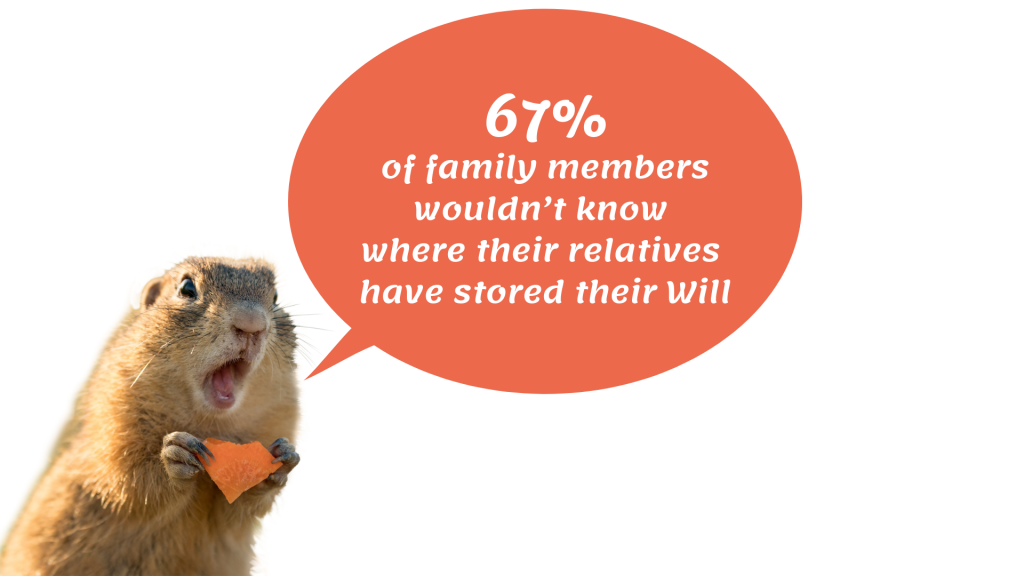
Many people choose to store their Will in their own home but recent research suggests that 67% of family members wouldn’t know where their relatives have stored their Will.

family_members_wouldn’t_know_where_their_relatives_have_stored_their_Will

Storing your Will at home also has the additional worry of ensuring that it is protected against any flood or fire risk as well as being taken, among other valuable possessions, in the event of a burglary.

Storing your Will in a secure location, and advising your Executors of this, is essential – especially after going to the effort of making a Will and getting all your wishes down!

If you would like to have a chat with us about storage options, please do. These are low cost and include the option to amend your Will, at no additional cost, whilst your Will is stored with us.

If you would like to have a free chat about your existing Will, making a new Will or storage of your Will, please contact us on info@TotalLegacyCare.co.uk or 01727 865 121

Leah Waller

Got a Question or want to book a FREE Consultation?

PLANNING… What are you waiting for?

PLANNING...

What are you waiting for?

We started the New Year by getting you think about all those grown-up things that are  on all of our to-do lists but many of us don’t get round to…that’s right, we are talking Wills, Powers of Attorney, Funeral Plans, Retirement and even dealing with the death of a loved one.

So, now that we have put all of our checklists and tips out there for you, we thought we would consolidate everything, in one place, to make things that little bit easier for you:

Let’s start at the beginning, New year, new resolutions, new you? Let’s getting planning…, when Neil gave an overview of exactly what we would be looking at over the course of our planning articles:

Here, Neil discusses exactly why he wanted to get a Funeral Plan in place and why his boys were such an important part of this decision.

A little checklist of considerations and points so that you can review your own Will and ensure that it is up to date and your wishes will be carried out when needed.

If you were in the unfortunate situation where you had lost capacity, whether that be temporarily or on a permanent basis, who would you want to make decisions for you?

Who would you trust to make the decisions that you would have if you had been able to?

As we know that being an Executor, although a privilege to be asked, can be a massive burden! We have set out a brief checklist of some of the things that an Executor should consider first when dealing with probate.

Just because saving for retirement is difficult, it doesn’t mean you should give up…Bobby Keer shares some great tips with us!


If you would like to have a free chat, please contact us on  info@TotalLegacyCare.co.uk or 01727 865 121

Leah Waller

Got a Question or want to book a FREE Consultation?

Valentine’s Day… What better gift to give your loved ones than peace of mind

Valentine's Day…

What better gift to give your loved ones than peace of mind

We are taking a little break from our weekly planning articles and checklists that are helping you to get all those important ‘grown-up’ jobs off of your to do list 😉 

This week we are talking about…Valentine’s Day.

So, hands up how many of us have forgotten to get our loved one a gift, or are at that stage where Valentine’s Day is just another day and gifts are a long distant memory?

Well, what about giving our loved one’s the gift of peace of mind?

What do we mean by peace of mind?

We set out below a couple of things that we know will help give you peace of mind as well as relieving the financial and emotional burden from your loved ones when the time comes:

  • Lasting Power of Attorney

Putting a Lasting Power of Attorney in place allows you to give the person you trust most the power and authority to make decision for you, in relation to you health & welfare and property & financial affairs, if you are unable to do so.

Giving your loved ones, as well as yourself, peace of mind that should anything happen and you are unable to make decisions (whether that be due to temporary or permanent loss of capacity or simply because you cannot be physically present where you are needed) that there is someone in place to take those decisions for you and make the decisions you would have, if you were able.

  • Will

Having a Will in place (and reviewing that Will!) will give you and your loved ones

peace of mind that when the worst happens all your wishes are written down and can be carried out as you intended.

  • Funeral Plan

Having a Funeral Plan in place means that you can not only take away the

financial burden from your loved ones by paying for your funeral in advance (whether in a lump sum or by instalments), you also remove the emotional burden as all your wishes will be written down and can be put into effect by the Funeral Director with minimal input from your loved ones at an already difficult time.

We have these in place as we understand just how important it is to be protected and we are more than happy to have a free chat with you too, no obligation – honestly!

If you would like to have a free chat about anything in this article, please contact us on  info@TotalLegacyCare.co.uk or 01727 865 121

Leah Waller

Happy Valentine's Day!

PLANNING…Checklist for Executors

PLANNING...

Checklist for Executors

This week we are focusing on Probate and the important role of Executors within the probate process.

So, let’s address a couple of questions first shall we…

What is probate?

Strictly speaking, Probate is proving the Will and showing that it is valid but many use the term to refer to the legal process following someone’s death. This is when someone with legal authority (the Executors, if there is a Will, or Administrators, if there is no Will) obtain a Grant of Probate or Letters of Administration, and can then collect in and distribute the Estate of the deceased.

Probate is usually required where an Estate (all the property, cash, savings, ISAs, investments and any other valuables) of the deceased have a combined total of £5,000 or more.

What is an Executor?

An Executor is appointed in your Will and is responsible for collecting in and protecting your estate, including any property and assets that you own, and carry out the distribution of such items in accordance with your wishes.

Now for the tough part…an Executor is legally responsible for everything that they do, or fail to do, when administering the Estate and they are financially liable for any loss that results as a breach of their duty, even if the breach was a mistake

To make things a little easier (as we know that being an Executor, although a privilege to be asked, can be a massive burden!) we have set out a brief checklist of some of the things that an Executor should consider first when dealing with probate:

  • Obtain the Death Certificate

As the Executor you will be responsible for notifying certain people, companies and authorities of the death and so the Death Certificate will be required.

  • Find the original Will

As the Executor you will need the Will in order to apply for Probate.

  • Applying for the Grant of Probate

This is the official document giving you authority to administer the Estate of the deceased, collect in and deal with their assets and then distribute them accordingly.

  • Collect in assets of the Estate

The Will and any accompanying documents that the deceased may have left may well give specific instructions as to what the deceased has and, importantly, where it can be located, however such specifics may not be given.

As the Executor you will need to ensure that you collect in and account for all of the deceased’s assets including property, stocks, shares, bank accounts, ISAs, personal items etc.

This will also include searching for any missing assets.

  • Put insurance in place

The Executor will be responsible for ensuring that relevant insurance is in place for the assets of the deceased until they can be distributed in accordance with the Will.

  • Complete Inheritance Tax Forms

The Executor is responsible for completing and submitting the Inheritance Tax Forms.

The Estate is responsible for paying the Inheritance Tax due on the Estate and the Executor is responsible for ensuring this happens.

  • Complete

The Executor is responsible for completing and submitting the necessary Income Tax and Capital Gains Tax returns and paying, from the Estate, any tax that is due.

  • Pay debts and liabilities

The Executor is not responsible for paying these personally however, the Executor is responsible for ensuring that any debts and liabilities, including funeral costs, are paid from the estate.

The Executor should also put a notice to debtors in the London Gazette.

  • Preparing Estate Accounts

The Executor is responsible for the preparation of Estate Accounts and ensuring that the Accounts are distributed to the relevant parties.

  • Distribution of the Estate to the Beneficiaries

The Executor will then be responsible for distributing the Estate assets, following the payment of all debts and taxes, in accordance with the deceased’s wishes as set out in their Will.

A detailed record of this, and all the steps taken by the Executor, should be kept throughout the process.

REMEMBER…You don’t have to do everything alone, ask for help as and when you need it!


You may need to ask for professional help from solicitors, probate specialists and/or tax advisers. If the estate is relatively small and doesn’t have any complexities, the Executor may well decide that they can carry out the process by themselves and this is also fine.


If you would like to have a free chat, please contact us on  info@TotalLegacyCare.co.uk or 01727 865 121

Leah Waller

Got a Question or want to book a FREE Consultation?

PLANNING…Wills Checklist

PLANNING...
Wills Checklist

This week we are focusing on ensuring that firstly, you have a Will but secondly, and most importantly, that your Will does exactly what you want it to…and is valid!


Remember, a Will is a working document and we always recommend reviewing your Will every three to five years (as a minimum) and when a life event occurs to ensure that it still does what YOU want it to.


We have set out below a little checklist of considerations and points so that you can review your own Will and ensure that it is up to date and your wishes will be carried out when needed.


  1. Executors


    1. Have you appointed someone that you TRUST implicitly as your Executor (or has the person who drafted your Will been inserted)?


    1. Does your Will mention replacement Executors to cover circumstances in which your first choice Executor is unable or unwilling to act?


  1. CHILDREN – such an important consideration for any parents!


    1. Who would you like to look after your children should both you and your spouse pass before they reach 18?


    1. Have you thought about replacement Guardians to cover circumstances in which your first choice Guardians are unable or unwilling to act?


  1. Trusts


    1. What age would you like your children to reach before having unconditional access to their inheritance (usually 18, 21 or 25)?


    1. Who have you appointed as Trustees (Managers, if you like) of your finances should your children inherit before reaching 18 (or the age you have prescribed in the Will)?


    1. Has a professional individual / body / organisation been appointed as Trustee and you would prefer to appoint a loved one?


    1. Do you need to consider including a Vulnerable Beneficiary Trust and are you aware of the special tax treatment?


    1. Do you want to pass your property to your children but ensure your spouse has somewhere to live for the remainder of their life?


  1. Specific Gifts


    1. Are there any specific gifts that you wish to leave to anyone?


  • Wedding ring

  • Watch

  • Jewellery

  • Money etc.


  1. Animals


    1. Do you have any animals that you need to make provisions for in your Will?


  1. Exclusions


    1. Is there anyone that you have specifically excluded from your Will (an ex-spouse, perhaps) that we should clarify an exclusion for?


  1. Funeral Wishes and Organ Donation


    1. Have you included your Funeral wishes in your Will or have you put a Funeral Plan in place?


    1. Have you included your wishes as to organ donation?


  1. The Legalities


    1. Witnessing

Has your Will been witnessed by two individuals that saw you sign the Will?


Are the witnesses, or their spouse, mentioned in the Will as a Beneficiary?


    1. Marriage

Marriage can make your Will invalid, unless the intended marriage is stated within your Will. So, if you have got married since writing your Will that Will will no longer be valid.

If you would like to have a free chat about your existing Will or making a new Will, please contact us on info@TotalLegacyCare.co.uk or 01727 865 121

Leah Waller

Got a Question or want to book a FREE Consultation?

New year, new resolutions, new you? Let’s getting planning…

New year, new resolutions, new you?
Let’s getting planning...


So, it’s the start of the New Year and we’ve said goodbye to another that’s passed. Last year may have been good, it may have been troubled and you may not have got round to ticking everything off that to-do list or kept last year’s resolutions…


Each week, we will be writing an article around the “grown up stuff” that should be planned for with useful information and free advice as always to help you to plan for your family’s future and keep on track (don’t worry we will keep them short, to the point and add a little element of fun where we can!).


We will be looking at:


  1. Funeral planning

    1. How to save your loved ones the emotional burden; and

    2. How to save loved ones the financial burden


  1. Wills & Trusts

    1. Planning for Inheritance Tax;

    2. Ensuring your money goes where you want it to;

    3. Guardians for your children;and

    4. Protecting your property against unwanted costs and taxes.


  1. Lasting Power of Attorney

    1. What is it and why is it important? and

    2. Who to choose as your Attorneys


  1. Probate

    1. What is the process and why is it important?

    2. How to get the help you need at such a difficult time;

    3. Why IHT forms are so important to complete correctly; and

    4. What are you liable for as an Executor?


  1. Pensions and investments

    1. Do you know how your pensions are performing?

    2. Are your investments working in the way you want them to or could they be placed elsewhere?


In all of our articles we aim to give you the information that you need in a simple and easy to understand format, to help you to make the decisions that you want to.


It seems that there is never enough hours in the day but let’s start the year on a positive and MAKE TIME to plan and get some of these things in place and off of your to-do list.


Check out our website for lots of free information or contact us for a free meeting.

Neil Barras-Smith

Got a Question or want to book a FREE Consultation?

Divorce: How does it affect my Will?

Divorce: How does it
affect my Will?

We all know the part “til death do us part” but sometimes, and ever more commonly, marriages end in Divorce – 108,421 in 2019. Some divorces are amicable, some not so much…

After taking all the time (not to mention legal costs!) in agreeing on how money, property & assets are separated, is a Will still valid?

The simple answer is Yes. If you have a valid Will whilst you are still married then divorce does not revoke your Will and so it remains valid.

Marriage on the other hand does invalidate a Will (unless your Will includes your intended marriage).

In some cases, you may not want to change your Will. Your Will, made when you were married, may well state who your assets should pass to and this may not change. However, upon divorce your ex-spouse will be treated as having died at the date that the Decree Absolute is given and so will no longer be Executor, Trustee or Beneficiary under your Will unless contrary provision is made in the Will.

So, what should you do if you do want to change who will inherit your estate, and how easy is it to change?

You can revoke a Will at any time (providing you have capacity to do so) and this is quite simple to do. 

If you make a new Will at any point in your life it will revoke any previous Will that you have made (providing it is done properly). 

So, when should you consider changing your Will? 

You can make a new Will at any time and so it may be worth considering this after separating from a spouse. You do not have to wait for the divorce to be finalised or the Decree Absolute in order to finalise a new Will. 

What if you get remarried? 

It is not uncommon nowadays for individuals to have second or subsequent marriages. 

As mentioned above, when you get married your Will becomes invalid unless your Will states your intended marriage and so it is important to review your Will and make sure it is still in place and does what you want it to. 

Another consideration upon a subsequent marriage is your children. If you have children from a previous marriage then they may not receive any of your Estate if you die without a valid Will in place. Again, it is always best to review your Will on a regular basis to ensure your wishes are carried out. 

If you would like to have a free chat about your existing Will or making a new Will, please contact us on  info@TotalLegacyCare.co.uk or 01727 865 121

Neil Barras-Smith

Got a Question or want to book a FREE Consultation?

How I chose the guardians for my children…

How I chose the guardians for my children...

When choosing to put guardians in your Will what should you consider?

Often, when we are taking instructions from our clients, the conversation around putting guardians in place is one of the toughest.

For many, the main reason for getting their Will sorted is heavily influenced by who should look after their children if the worst happened. As a parent, it is especially hard to imagine someone else bringing up your children, nobody wants to think about what will happen if they are not around, but it is always worthwhile planning for and having measures in place should the tragic situation arise.

So, who is best to choose as guardians, what should you consider and how is best to tackle this difficult consideration and the conversation with your proposed guardians?

Using my own circumstances as an example, when I put my Will in place, I had to consider all of the following:


1)     Where would my children like to be (who with and location) if both of their parents were no longer around to look after them?


2)     Friends; I thought that during this tricky time of grief, my children would need to remain with as close to a normal routine as possible. Location was key to this so they can keep contact with friends, remain at a school they are familiar with, have family close to them and continue with clubs and activities they are used to and enjoy. This is not possible for everyone but was a consideration for me.


3)     Stability; choosing guardians that are able to look after my children until they are 18 and/or no longer need guardians was extremely important. Faced with the loss of their parents and moving in with guardians once is traumatic and I wouldn’t want this to happen again should their chosen guardians not be around until they reached an age they could live independently.


4)     The age of my proposed guardians; if the worst should happen now, it may be ok for my parents to cope with looking after my children, but what happens in 10 years’ time, will my parents be too old to cope or will it be too much for them?


5)     Am I burdening someone with the challenge of bringing up two (possibly additional) children?


6)     How will I finance my children through schooling and further education if I no longer had a regular wage coming in, I couldn’t expect someone to take on the responsibility of looking after my children and the added financial burden too?


All of these thoughts and worries ran through my head and I have always been a believer in the phrase “never ask someone to do something for you that you wouldn’t do in return for them”.

After careful consideration with my wife, we decided that the best person to be guardian of our children, should the circumstances occur, was my sister.

I wanted to have the conversation with my sister to ensure she was okay with this decision and once I had that conversation she was honoured and relieved that I had asked and had said that it was something that had been playing on her mind for a while but didn’t want to address it.

My sister also asked if I would be guardian to her children and this prompted her to put her Will in place soon after.

It was important to me to consider location; if my sister was a hundred miles away or even in a different country, would I have made the same decision? Probably not. Would I have wanted to put the burden on my parents? Would I look to a friend to be guardians of my children? There is a lot to consider all whilst bearing in mind what is best for my children. Then I had to consider reserve guardians, what if my sister was not willing to act if the time came, or she was no longer around. I went through the same considerations when putting my reserve guardians in place to cover this eventuality. 

One thing playing on my mind when I first began planning my Will and who I would appoint as guardians was, if I don’t plan, prepare and choose guardians, who will?

In circumstances where guardians have not been named in a Will, and no provision has been made for the children, the responsibility falls to the Local Authority to place children with guardians. The Local Authority have a duty to take care of the children’s best interests whilst making their decision, but this could take time and there is a possibility of being placed in temporary care whilst this process takes place. A harrowing thought that urged me to get my wishes written in my Will.

Like most of our clients, when I finally signed my Will, I felt a relief that despite what the future holds for me, I have taken the precautionary measures to ensure my children are looked after by the right people.

The lesson I learnt when dealing with this was that it’s always best to have these conversations and speak openly about your concerns. We managed to resolve two issues in one; guardians for both my children and my nephews.

I’m not saying that this is the solution for everyone and other family dynamics are different but, having these conversations are always worthwhile and ensuring that those people that you would like as your guardians understand the responsibility and are happy with the decision. 

 If you would like to discuss your Will and potential Guardians, call us on 01727 865 121 or email us at info@TotalLegacyCare.co.uk for a free discussion on how we can help.


Got a Question or want to book a FREE Consultation?

When should I make a Will?

When should I make a Will?

We often hear:

  • I’m too young to think about a Will
  • I don’t have time to make a Will
  • I don’t have anything to leave in my Will
  • My family know what I want to happen to my things when I die
  • I haven’t got around to sorting my Will yet but I know I should…

So, when should you put a Will in place?

Honestly, there is no right answer, no one size fits all! Everyone’s circumstances are different and so timing will be different for everyone.

Everyone’s lives take different paths and at different ages.

Below we have set out some of the milestones that making and reviewing your Will should be considered:

Buying your first property

When most people buy a property it is usually their most valuable asset, so when buying your first property it is important to consider (among all the other considerations when taking the plunge and buying your first property!) who your property, along with all your other possessions, should be left to.

Getting married

When you get married any previous Will that you may have is revoked and so is completely invalid. Once you are married, priorities change and so may your wishes in relation to your possessions so shortly after a marriage, or in contemplation of marriage, your Will should be reviewed.

If a Will is created in contemplation of a specified marriage then the said marriage will not revoke the Will, however any other marriage will revoke an existing Will.

Having a baby

Whether you have your own children, are fostering or adopting, having a child, or children, changes your life and means you are responsible for more than just yourself.

A growing family comes with so many considerations, worries and changes, not least the major question as to who you would want as the guardians of your children should you no longer be around. If guardians are not stated in a Will there is a possibility that the local authority may become involved and place the children in care whilst they decide who is best to look after your children… a worrying thought!!

Buying a new or bigger property

As we said, your property is usually your most valuable asset and so when buying any new property and with a change in financial circumstances, your Will should be a key consideration to ensure it still covers you and what you want to happen to your property and possessions.

Investing in buy-to-let properties or second homes

When investing in more property you should also consider your Will and taking advice in relation to the financial implications on the properties that you own, not only during your lifetime but also in relation to Inheritance Tax and what can be done to try and reduce this.

Investing in assets abroad

When you invest in assets abroad they may not be covered by your Will that has been made in the UK. When buying property or any other assets that will be kept in another country you should consider whether legal documentation is required in that country to cover your assets and your inheritance wishes.

Getting divorced

So, you’ve got divorced, do you still want your property and possessions to go to your former-spouse?

Although a marriage revokes a Will, a divorce doesn’t! It is worth reviewing your Will at the end of a marriage to ensure that what you want to happen is set out in your Will…it’s unlikely that you still want your former-spouse to inherit all of your worldly assets.

Getting re-married

As we have set out above, when you get married, whether for the first time or a subsequent marriage, any existing Will that you have in place is revoked.

You may also want to consider putting exclusions within your Will to state that any former-spouse should not benefit under your Will. You may also want to protect inheritance for children you may have had from preious relationships.

Owning a business

When you take the leap to start your own business, your financial situation will change again and you are potentially bringing more assets into your estate. Depending on the business setup you may need to take this into account within your Will. There are also tax reliefs you can utilise for businesses if planned properly.

Death of a Grandparent / Receipt of Inheritance

When you are a beneficiary under a loved one’s estate you are bringing more assets, and therefore more value, into your own estate. This is an important time to take account of the value of your estate and whether you should be taking steps to try and limit or reduce the amount of inheritance tax that may well be payable on your own estate.

Grandchildren

When you have grandchildren, as when you have children, your family is growing again and this is another generation that you may well wish to make specific provisions for within your Will.

Retirement

This is another milestone where your financial circumstances change. You may well be taking steps to consider your finances and assets and so this is the perfect opportunity to review your Will and provisions that you have set out.

Death of a Parent

This is a situation that none of us want to think about.

However, with more assets coming into your estate, the possibility of additional properties and valuables becoming your own, it is worth considering the tax implications and ensuring that your Will properly provides for your own loved ones in the way you want to.

There is never a right time to put a Will in place but as you can see there are many milestones throughout your lifetime in which your Will and future wishes should be considered and reviewed to ensure that your present Will does what you want it to.

To put a Will in place, is more simple than you think. It’s not an arduous task and we make it as simple as we possibly can.

If you would like to have a free chat about your Will, please contact us on  info@TotalLegacyCare.co.uk or 01727 865 121

Got a Question or want to book a FREE Consultation?

Inheritance Tax: Record £5.2billion paid by UK in 2017/18

Inheritance Tax: Record £5.2billion paid by UK in 2017/18

With the Government collecting £5.2billion in Inheritance Tax last year, it is well worth considering whether your estate is liable for Inheritance Tax.


Although the record amount of Inheritance Tax paid in 2017/18 is nothing to be sniffed at, with only one in twenty estates actually paying Inheritance Tax there are ways of ensuring that your estate is not liable for Inheritance Tax, but in order to do so we must consider when Inheritance Tax is payable.


Inheritance Tax is payable upon death, where an estate exceeds the Nil Rate Band, at a rate of 40%. So, what is the Nil Rate Band?

The Nil Rate Band is a personal allowance, that each individual is able to gift, upon death, without attracting any Inheritance Tax.


The Nil Rate Band for 2018/19 (this is considered every April) is set at £325,000 per person, this may not seem like a lot considering the increase in property prices. However, in addition to the Nil Rate Band, if you are passing property to a direct descendant (a child, grandchild, great-grandchildren, step-children, adopted children or foster children) then you are entitled to claim the Residential Nil Rate Band. The Residential Nil Rate Band is currently set at £125,000.


If you are married and the estate is passed to the surviving spouse upon the death of the first spouse, then no Inheritance Tax is payable. Don’t worry, the deceased’s Nil Rate Band and Residential Nil Rate Band is not lost…

Upon the death of the surviving spouse, the Nil Rate Band and Residential Nil Rate Band can be combined to allow for the estate to pass to a direct descendant without attracting Inheritance Tax up to a value of £900,000 (in the 2018/19 tax year) by taking advantage of both spouses Nil Rate Band and Residential Nil Rate Band.


With the Government committed to increasing the Residential Nil Rate Band by £25,000 to April 2020, by the tax year 2020/21, an estate that includes a property and that is taking advantage of both spouses Nil Rate Band and Residential Nil Rate Band will be able to gift £1million to a direct descendant without attracting any Inheritance Tax.


If your estate is valued at over £2million then your use of the Residential Nil Rate Band attracts conditions and so if your estate is valued at over £2million then we will need to consider your exposure carefully to limit this where possible.


If you would like to have a free chat about your Inheritance Tax liability and planning for the future, please contact us on  info@TotalLegacyCare.co.uk or 01727 865 121


Leah Waller