Starting a conversation about the ‘Elephant in the Room’

Starting a conversation about the ‘Elephant in the Room’

With over 30million people in the UK without a Will, there are so many reasons that it is one of those things that gets put off, moves down the ‘To-Do List’ and sometimes just never ever gets done BUT it doesn’t have to be the difficult conversation that many expect!

Many of us put off making a Will because we don’t want to tempt fate or presume that those we want to take care of will be able to inherit our assets anyway but that isn’t always the case.

Where there is no Will, the Rules of Intestacy kick in and this means that you lose control over who you would want to inherit and this is chosen for you…

So, if you are one of those 30million that have been putting off making a Will, or have a Will that may need updating, why not take a look at some of these considerations…

Total_Legacy_Care_Coral_Logo

Who do you want to inherit your Estate?

We all would like to think we are immortal, right?

Unfortunately, that isn’t the case and so we should have consideration for who we would want to benefit from everything we have worked hard for, when we are no longer around.

This will depend on your circumstances and is likely to change at different stages of your life, depending on your relationships, children, grandchildren, nieces and nephews, perhaps even godchildren or second marriages.

Total_Legacy_Care_Jayde_Logo

Estate Valuation

The value of your Estate is calculated by totalling everything that you possess, own or have an interest in at the date of your death (this will include property – residential, buy-to-lets, commercial and holiday homes), money, bank accounts, savings, ISAs, Stocks & Shares, Cars, Jewellery and personal possessions.

Any liabilities or debts will then be deducted from this total, including mortgages, loans, utility bills, credit cards plus any funeral expenses.

Total_Legacy_Care_Yellow_Logo

Inheritance Tax

If your Estate valuation totals more than £325,000 then you may have an Inheritance Tax Liability. However, there are other reliefs available including relief if you are leaving your residential property to direct descendants, if you have any business assets and if you are married or in a civil partnership and leaving your estate to your spouse or civil partner. It is worthwhile seeking advice from a professional in order to ensure you are taking advantage of all the reliefs that may be available to you.

There may also be other options available to you, depending on your Estate Valuation, your income and projected needs over your lifetime, in terms of Trusts and Financial planning to reduce any Inheritance Tax liability, again it is worthwhile seeking expert advice in relation to this.

Total_Legacy_Care_Grey_Logo

Gifting

You may well benefit from making gifts during your lifetime, but this may not be possible for everyone.

Once you have a better idea of your Estate Valuation, who you want to benefit from your Estate upon your passing and whether you have any Inheritance Tax Liability, you may want to consider whether you could benefit from making gifts during your lifetime.

Each of us is able to make gifts of £3,000 each year without attracting any Inheritance Tax liability (and we can carry this over for one-year too!).

However, any gifts that exceed this may still be liable for Inheritance Tax if made within seven years of your death…again, we would recommend seeking professional advice if you are considering making gifts during your lifetime.

Total_Legacy_Care_Coral_Logo

Wishes

Do your loved ones know what your plans are for the future, do you have certain expectations in relation to your later life care (this could be dealt with in a Lasting Power of Attorney) or perhaps even your funeral?

You may even want to give gifts in your Will with a condition attached (upon reaching a certain age, to be used for certain circumstances or only to be received upon meeting a condition).

Setting these out can be really helpful, not only in giving you peace of mind but also in preventing any unnecessary arguments or disputes when you are no longer around.

Total_Legacy_Care_Jayde_Logo

Charities

Another consideration that may be worth thinking about, is whether you would like to leave anything to Charity upon your passing.

If you are leaving 10% or more of your Estate to a Charity then your Inheritance Tax Liability will be reduced from 40% to 36%.

We are always happy to have a free chat to answer any questions that you may have, offer advice or help you to put something in place.

If you have any questions or would like to discuss putting a Will in place, call us on 01727 865 121 or email us at info@TotalLegacyCare.co.uk for a free consultation

Leah Waller

Have a Question or
want to book a 

FREE Consultation?
 

Wouldn’t it be great if we could predict the future?

Wouldn't it be great if we could predict the future?

We all have busy lives and so sometimes just predicting what today is going to ring is an achievement, let alone way into the future! It would be great though, wouldn’t it 😉

Unfortunately, none of us know what is just around the corner and so planning for it is key. That is where Lasting Powers of Attorney (LPAs) come in! LPAs are relevant during your lifetime and ensure that someone that you trust and have appointed as your Attorney can act on your behalf when you are unable to. Check out our article, Why Do YOU need an LPA? 5 reasons YOU should put your LPA in place for more information on LPAs.

We all know that age is going to hit us hard at some point but that ‘point’ is way off in the future, right? Unfortunately, this may not be the case…

Just looking at a few celebrities, we can see that an LPA may be needed a lot sooner than we would have hoped!

Chris_Tarrant

Chris Tarrant was just 67 years of age when he suffered a stroke that led to an emergency operation and ongoing rehabilitation to help him to regain his speech and physical movement.

Michael_Schumacher

Michael Schumacher was only 44 years old when a skiing accident resulted in him being placed into a medically induced coma (for six months!) and suffering life-threatening head injuries. 

Micahel Schmacher is a father of two children, who were aged just 14 and 16 at the time of the accident.

Richard_Hammond_Top_Gear

Richard Hammond was involved in an awful car accident whilst filming for Top Gear at the age of just 37 causing major brain damage after being in a coma for two-weeks, this also led to significant memory loss and depression.

However, it is not just celebrities that this happens to and when we take a look at the facts, they are hard-hitting! Just a couple of statistics for you:

  • Every 90-SECONDS, someone in the UK is admitted to hospital with a brain injury;
  • Every THREE-MINUTES, someone in the UK is diagnosed with Dementia (and this is not just a condition that affects those over 65!);
  • Every FIVE-MINUTES, someone in the UK suffers from a stroke;
  • One in Six people within the UK will have a stroke during their lifetime;


So, enough of the doom and gloom….

What can we do to ensure we are protected, plan for our future and our family’s future and give us some much needed peace of mind?

The answer is a simple one…. Get your Lasting Powers of Attorney in place whilst you still have capacity to do so!

There are two types of Lasting Power of Attorney:

  • Health & Welfare Lasting Power of Attorney; and
  • Property & Financial Affairs Lasting Power of Attorney.

(to find out more about these check out our article Why do I need an LPA?)

An LPA allows you to appoint an Attorney, or Attorneys, to make decisions for you, and on your behalf when you are unable to. This could just be a temporary measure due to a temporary loss of capacity either physically or mentally or a more permanent arrangement.

You can give your Attorneys guidance and state your preferences, should you choose to do so, within your LPAs and set out the extent of the power that you want your Attorneys to have.


So, what if you don’t get around to getting these all important LPAs in place?

If you do not  register LPAs whilst you have the capacity to do so then you lose control to a certain extent as it is then for your loved ones, or a professional, to apply to the Court of Protection for a Deputyship Order in order to manage your financial affairs on your behalf. 

This process is costly – a court fee of £385, not to mention legal fees if you seek legal advice and potentially a fee for a professional to verify your lack of capacity to support the application being made, and timely – the application can take around 4 months to be granted from the date of submission however, if there are objections made to the application then this process can take 9-12 months!

Once you have lost capacity you lose the ability to choose who you want to appoint to manage your affairs for you and ultimately the choice is left to the Court of Protection – this may not be who you would have chosen had you been able to make the choice yourself. 

You also lose the opportunity to give guidance to your appointed Attorneys and advise of your preferences.

In relation to your health and welfare, if you do not make an LPA to cover this whilst you have the capacity to the Court of Protection will be reluctant to appoint a Deputy in relation to your healthcare decisions unless the circumstances are extremely complex. Again, meaning you lose the control to appoint who you trust to make decisions on your behalf.

Getting an LPA in place doesn’t have to be complicated, time consuming or expensive and can ensure that you have peace of mind and take the burden away from those closest to you.


If you would like a free chat to see how we can help or if you have any questions please do not hesitate to get in touch for a FREE consultation on info@TotalLegacyCare.co.uk or 01727 865 121

Leah Waller

Have a Question or
want to book a 

FREE Consultation?
 

Godparents & Guardians: What is the difference?

Godparents & Guardians: What is the difference?

So, you may have appointed Godparents for your children, whether in a religious ceremony or informally, but…

  • what does that mean? 
  • does that impose a legal obligation?
  • should you still appoint guardians?
  • can your guardians and godparents be different?
  • how is best to protect your children should you no longer be around?

Let’s take a look at these questions and have a look at what would happen to your children should the awful situation arise that their parents were no longer able to take care of them whilst they are still a minor.

There is an important distinction between Godparents and Guardians…no matter what we would like to think or would like to happen in an ideal world.

So, first things first…Godparents have no legal right or obligation to take care of your children, either during your lifetime or when you are no longer around. However, Guardians (appointed in your Will) do have a legal responsibility to take care of your children when you are no longer able to.

What is the role of a Godparent?

Being asked to be a Godparent is an absolute privilege (having three godchildren myself, I should know :)) but what does it mean?

A Godparent, whether present at a Christening Ceremony or Baptism, or asked informally, take a spiritual responsibility for their Godchild, whether that be in relation to the religious upbringing and spiritual upbringing or just generally being a close influence and role model for the child.

Godparents_Guardians

Appointing Guardians

Even where you have appointed Godparents for your children, you should still be appointing Guardians for them in your Will to ensure that they are taken care of, as you intended and by the people you trust most, should the worst happen and you no longer be around.

Your Guardian will only step into the role of having parental responsibility for your child should something happen to both you and their other parent – even if you are divorced, or separated, parental responsibility will trump a Guardian appointed in a Will.

If you want some more information on choosing the right Guardians, why not check out our article, written by Neil on how he chose the Guardians for his children?

Can your Guardians and Godparents be the same?

Yes!

Godparents are usually appointed when children are quite young and are rarely changed.

However, Guardians should be reviewed throughout your lifetime. The Guardians that you appoint when your children are young may be very different as they grow up and as the Guardians grow older too. For example, many people would choose their own parents as Guardians whilst their children are young, especially where you have a great relationship with your parents and they have an active role in their grandchild’s life, however, as your children grow up, your parents will grow older too and may not be able to take on the responsibility of bringing up your children should you no longer be around. That’s okay…your Guardians can be reviewed and changed at any time and we always recommend reviewing your Will every 3-5 years and so reviewing your Guardians at this time is ideal too.

Speaking to your proposed Guardians…

Speaking to your proposed Guardians may seem like a difficult conversation BUT imagine losing your loved ones and then finding out that you are now responsible for their children with NO PRIOR WARNING! Not ideal!

So, having that conversation with your proposed Guardians to discuss why you would like to appoint them and ensure they are comfortable with the decision and also to discuss any concerns or queries they may have so that everyone is on the same page is so important, not to mention being able to put everyone at ease and give you peace of mind.

It is important that your proposed Guardians know exactly what is involved and what their legal responsibilities are, as well as knowing how you want your children being brought up whether that be in relation to their education, home life, general welfare or anything else.

If you would like to discuss your Will and potential Guardians, call us on 01727 865 121 or email us at info@TotalLegacyCare.co.uk for a free discussion on how we can help.

Leah Waller

Have a Question or
want to book a 

FREE Consultation?
 

What happens if I die without a Will?

What happens if I die without a Will?

We are always saying how important it is to have a Will in place – well, we would, wouldn’t we?

But, what happens if you don’t?

What happens to all of your hard-earned cash, property and possessions?

We have created a simple flowchart for you to have a look at to see exactly what would happen to all your worldly goods should anything happen to you and you have not got a Will in place…you may well be surprised who could get your hands on it!

And…even if this is where you would want it to go, without a Will in place, it could be a costly process for your loved ones to go through in order to access their Inheritance.

Law_of_Intestacy_2020
(Please click on the image if you would like to download your very own copy!)

So, what does this all mean?

Let me set out for you the above…

The first consideration is whether you are married, if you are married and your spouse or civil partner survives you:

  • If the whole Estate is worth £250,000 or less
    • your surviving spouse or civil partner will inherit your entire Estate
  • If your Estate is worth more than £250,000
    • your surviving spouse or civil partner will inherit the first £250,000
    • The remainder will be split as follows:
      • your surviving spouse or civil partner will receive a life interest in HALF the remainder (above £250,000)
      • The other half to be split between any surviving children (if your children predecease you, leaving children of their own, your grandchildren will inherit their parents’ share.

If you are NOT married then the order of inheritance is as follows (in equal shares):

  • Living Children / Grandchildren / Great Grandchildren*
  • Living Parents
  • Siblings*
  • Half-Siblings*
  • Grandparents
  • Uncles and Aunts*
  • Half-Uncles or Half-Aunts*
  • THE CROWN

*If the person listed prior to the * has predeceased you but has surviving children

then their children will inherit in their place.

In the list above, no-one further down the list can inherit if the group above can inherit, therefore, if there are no living children, grandchildren, great-grandchildren or parents then your siblings would inherit (or their children should your siblings have predeceased you). Your grandparents would NOT inherit however, as the group above them have.

You will see ‘THE CROWN’ at the bottom of the list. Yes, that’s right…if you leave no family (set out in the groups listed) then your whole Estate will pass to the crown – is that what you want?

The best and only way to ensure that your money goes exactly where you want it to and to who you want it to, is to get a Will in place.

If you would like to have a FREE chat about getting your Will in place, please contact us on info@TotalLegacyCare.co.uk or 01727 865 121

Neil Barras-Smith
& Leah Waller

Have a Question or
want to book a 

FREE Consultation?
 

Wills or Lasting Powers of Attorney: What is more important?

Wills or Lasting Powers of Attorney: What is more important?

Now, Martin Lewis the Money Saving Expert has been in trouble with the press recently as he has said that LPAs are more importantly than Wills. This caused huge controversy and saw the expert having to justify himself over-and-over on social media.

Here at TLC… we agree with him!

Wills are very important and we highly recommend everyone should get one in place to ensure their wishes are carried out exactly as they would like when they are no longer around. There are so many benefits to putting a Will in place that people, unfortunately, only come to realise when it’s too late.

But, as important as a Will is, it’s more intended for when you die.

Benefits_Of_An_LPA

An LPA is vital to ensure your are covered and protected DURING your lifetime.

An LPA allows someone that you trust to act on your behalf and make decisions that are in your best interests should you no longer be able to do so yourself. This can relate to both your health and welfare as well as your property and financial affairs.

We have written lots about the benefits of an LPA and why it is so important to have in place, so check out our articles on the topic if you would like to know more.

So, this is why we at TLC, and I personally, believe that LPAs are more important than a Will.

However, it this all could be down to perspective…

When looking at the importance of Wills and LPAs, let’s consider who’s perspective we are looking at it from and why that makes a difference.

For me, it’s more important to take the perspective of the individual who is making the Will or LPAs. For them having an LPA will benefit them during their lifetime, the Will only comes into effect when they are gone.

If you look at it from the other perspective, that of their loved ones that are left to deal with matters, which is more important for them? This may differ depending if the death is sudden and so a Will may be extremely useful, or whether the individual deteriorates and loses capacity and then the loved ones will also benefit from being able to assist and have the power given under the relevant LPA.

Without a Will:

  • Will the family know what the person’s funeral wishes were?
  • The person will die intestate, this means the Laws of Intestacy are to be followed and essentially this means the government decides where that individual’s money goes.

The family will need to carry out probate and go through the courts to be able to do so; this  could be a lengthy, complicated and expensive process that could be avoided by putting a simple Will in place (and it costs a lot less too!).

At what is already a difficult time for the family, having a Will in place makes things a lot more simple, and although still difficult, it can prevent family arguments and tension.

Without an LPA:

  • If a person loses capacity and does not have an LPA in place then life becomes that little bit more complicated. A loved one, or carer, can apply to the Court of Protection for Deputyship (this is where the court appoint an Attorney to act for the person who has lost capacity), but this is a lengthy and extremely costly process. In the meantime you may struggle with the following:

Financial affairs:

  • Joint bank accounts may be frozen;
  • No one will have authority to access bank accounts in the person’s sole name to pay for expenses such as, grocery shopping, utilities & amenities and care costs to name but a few;
  • No one will have authority to speak with any financial institutions on behalf of the person;
  • No one will have authority to speak with any utility companies to ensure the provision of necessary utilities;
  • No one will have authority to deal with the property on person’s behalf making any decision regarding selling the property and moving the person into more appropriate accommodation for their care needs;
  • No one will have authority to speak with the Local Authority or the Department for Work and Pensions on behalf of the person to ensure the  correct benefits and financial provisions are in place.
  • For the Health & Welfare side of things:
  • No one will have authority to give direction as to the person’s living arrangements or day-to-day activities/welfare;
  • No one will have authority to liaise with the person’s GP, Hospital staff or healthcare professionals;
  • No one will have authority to liaise with care home/ warden/ sheltered accommodation in relation to day-to-day care;
  • No one will have authority to liaise with Local Authority in relation to the person’s health and welfare issues. 

So, to clarify, both a Will and LPAs are vitally important to put in place but we feel as though an LPA is more important to an individual DURING their lifetime.

If you would like to have a free chat about Wills or Lasting Powers of Attorney, please contact us on info@TotalLegacyCare.co.uk or 01727 865 121

Neil Barras-Smith

Have a Question or
want to book a 

FREE Consultation?
 

Where should I keep my Will?

Where should I keep my Will?

So, you have taken the important step to make your Will but what should you do with it now?

Your Will is extremely important as it sets out, to those that you have left in charge (your Executors), exactly what should happen, upon your death, to your Estate – your money, property and possessions. 

If you do not have a Will then your Estate is passed on in accordance with the Rules of Intestacy, this may not be how you had intended, or would have wanted.

If your Will cannot be located upon your death then your Executors, or the Administrators of your Estate will have to deal with your Estate as though you had not made a Will.

Your original Will is the only legally binding document that will be accepted by the Probate Registry in order that your chosen Executors can distribute your Estate to those that you have chosen, in accordance with your wishes.

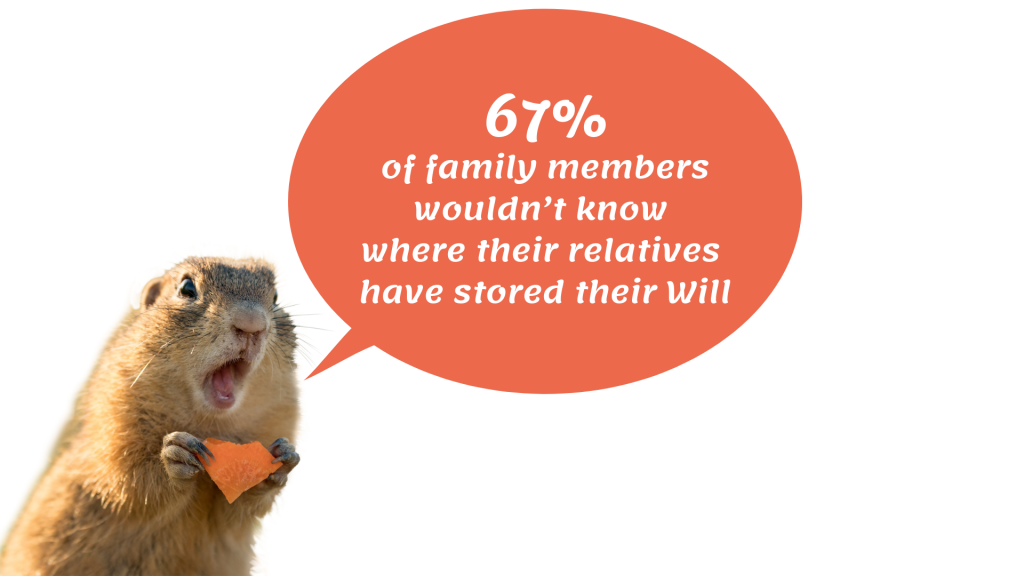
Many people choose to store their Will in their own home but recent research suggests that 67% of family members wouldn’t know where their relatives have stored their Will.

family_members_wouldn’t_know_where_their_relatives_have_stored_their_Will

Storing your Will at home also has the additional worry of ensuring that it is protected against any flood or fire risk as well as being taken, among other valuable possessions, in the event of a burglary.

Storing your Will in a secure location, and advising your Executors of this, is essential – especially after going to the effort of making a Will and getting all your wishes down!

If you would like to have a chat with us about storage options, please do. These are low cost and include the option to amend your Will, at no additional cost, whilst your Will is stored with us.

If you would like to have a free chat about your existing Will, making a new Will or storage of your Will, please contact us on info@TotalLegacyCare.co.uk or 01727 865 121

Leah Waller

Got a Question or want to book a FREE Consultation?

PLANNING… What are you waiting for?

PLANNING...

What are you waiting for?

We started the New Year by getting you think about all those grown-up things that are  on all of our to-do lists but many of us don’t get round to…that’s right, we are talking Wills, Powers of Attorney, Funeral Plans, Retirement and even dealing with the death of a loved one.

So, now that we have put all of our checklists and tips out there for you, we thought we would consolidate everything, in one place, to make things that little bit easier for you:

Let’s start at the beginning, New year, new resolutions, new you? Let’s getting planning…, when Neil gave an overview of exactly what we would be looking at over the course of our planning articles:

Here, Neil discusses exactly why he wanted to get a Funeral Plan in place and why his boys were such an important part of this decision.

A little checklist of considerations and points so that you can review your own Will and ensure that it is up to date and your wishes will be carried out when needed.

If you were in the unfortunate situation where you had lost capacity, whether that be temporarily or on a permanent basis, who would you want to make decisions for you?

Who would you trust to make the decisions that you would have if you had been able to?

As we know that being an Executor, although a privilege to be asked, can be a massive burden! We have set out a brief checklist of some of the things that an Executor should consider first when dealing with probate.

Just because saving for retirement is difficult, it doesn’t mean you should give up…Bobby Keer shares some great tips with us!


If you would like to have a free chat, please contact us on  info@TotalLegacyCare.co.uk or 01727 865 121

Leah Waller

Got a Question or want to book a FREE Consultation?

Valentine’s Day… What better gift to give your loved ones than peace of mind

Valentine's Day…

What better gift to give your loved ones than peace of mind

We are taking a little break from our weekly planning articles and checklists that are helping you to get all those important ‘grown-up’ jobs off of your to do list 😉 

This week we are talking about…Valentine’s Day.

So, hands up how many of us have forgotten to get our loved one a gift, or are at that stage where Valentine’s Day is just another day and gifts are a long distant memory?

Well, what about giving our loved one’s the gift of peace of mind?

What do we mean by peace of mind?

We set out below a couple of things that we know will help give you peace of mind as well as relieving the financial and emotional burden from your loved ones when the time comes:

  • Lasting Power of Attorney

Putting a Lasting Power of Attorney in place allows you to give the person you trust most the power and authority to make decision for you, in relation to you health & welfare and property & financial affairs, if you are unable to do so.

Giving your loved ones, as well as yourself, peace of mind that should anything happen and you are unable to make decisions (whether that be due to temporary or permanent loss of capacity or simply because you cannot be physically present where you are needed) that there is someone in place to take those decisions for you and make the decisions you would have, if you were able.

  • Will

Having a Will in place (and reviewing that Will!) will give you and your loved ones

peace of mind that when the worst happens all your wishes are written down and can be carried out as you intended.

  • Funeral Plan

Having a Funeral Plan in place means that you can not only take away the

financial burden from your loved ones by paying for your funeral in advance (whether in a lump sum or by instalments), you also remove the emotional burden as all your wishes will be written down and can be put into effect by the Funeral Director with minimal input from your loved ones at an already difficult time.

We have these in place as we understand just how important it is to be protected and we are more than happy to have a free chat with you too, no obligation – honestly!

If you would like to have a free chat about anything in this article, please contact us on  info@TotalLegacyCare.co.uk or 01727 865 121

Leah Waller

Happy Valentine's Day!

PLANNING…Wills Checklist

PLANNING...
Wills Checklist

This week we are focusing on ensuring that firstly, you have a Will but secondly, and most importantly, that your Will does exactly what you want it to…and is valid!


Remember, a Will is a working document and we always recommend reviewing your Will every three to five years (as a minimum) and when a life event occurs to ensure that it still does what YOU want it to.


We have set out below a little checklist of considerations and points so that you can review your own Will and ensure that it is up to date and your wishes will be carried out when needed.


  1. Executors


    1. Have you appointed someone that you TRUST implicitly as your Executor (or has the person who drafted your Will been inserted)?


    1. Does your Will mention replacement Executors to cover circumstances in which your first choice Executor is unable or unwilling to act?


  1. CHILDREN – such an important consideration for any parents!


    1. Who would you like to look after your children should both you and your spouse pass before they reach 18?


    1. Have you thought about replacement Guardians to cover circumstances in which your first choice Guardians are unable or unwilling to act?


  1. Trusts


    1. What age would you like your children to reach before having unconditional access to their inheritance (usually 18, 21 or 25)?


    1. Who have you appointed as Trustees (Managers, if you like) of your finances should your children inherit before reaching 18 (or the age you have prescribed in the Will)?


    1. Has a professional individual / body / organisation been appointed as Trustee and you would prefer to appoint a loved one?


    1. Do you need to consider including a Vulnerable Beneficiary Trust and are you aware of the special tax treatment?


    1. Do you want to pass your property to your children but ensure your spouse has somewhere to live for the remainder of their life?


  1. Specific Gifts


    1. Are there any specific gifts that you wish to leave to anyone?


  • Wedding ring

  • Watch

  • Jewellery

  • Money etc.


  1. Animals


    1. Do you have any animals that you need to make provisions for in your Will?


  1. Exclusions


    1. Is there anyone that you have specifically excluded from your Will (an ex-spouse, perhaps) that we should clarify an exclusion for?


  1. Funeral Wishes and Organ Donation


    1. Have you included your Funeral wishes in your Will or have you put a Funeral Plan in place?


    1. Have you included your wishes as to organ donation?


  1. The Legalities


    1. Witnessing

Has your Will been witnessed by two individuals that saw you sign the Will?


Are the witnesses, or their spouse, mentioned in the Will as a Beneficiary?


    1. Marriage

Marriage can make your Will invalid, unless the intended marriage is stated within your Will. So, if you have got married since writing your Will that Will will no longer be valid.

If you would like to have a free chat about your existing Will or making a new Will, please contact us on info@TotalLegacyCare.co.uk or 01727 865 121

Leah Waller

Got a Question or want to book a FREE Consultation?

Divorce: How does it affect my Will?

Divorce: How does it
affect my Will?

We all know the part “til death do us part” but sometimes, and ever more commonly, marriages end in Divorce – 108,421 in 2019. Some divorces are amicable, some not so much…

After taking all the time (not to mention legal costs!) in agreeing on how money, property & assets are separated, is a Will still valid?

The simple answer is Yes. If you have a valid Will whilst you are still married then divorce does not revoke your Will and so it remains valid.

Marriage on the other hand does invalidate a Will (unless your Will includes your intended marriage).

In some cases, you may not want to change your Will. Your Will, made when you were married, may well state who your assets should pass to and this may not change. However, upon divorce your ex-spouse will be treated as having died at the date that the Decree Absolute is given and so will no longer be Executor, Trustee or Beneficiary under your Will unless contrary provision is made in the Will.

So, what should you do if you do want to change who will inherit your estate, and how easy is it to change?

You can revoke a Will at any time (providing you have capacity to do so) and this is quite simple to do. 

If you make a new Will at any point in your life it will revoke any previous Will that you have made (providing it is done properly). 

So, when should you consider changing your Will? 

You can make a new Will at any time and so it may be worth considering this after separating from a spouse. You do not have to wait for the divorce to be finalised or the Decree Absolute in order to finalise a new Will. 

What if you get remarried? 

It is not uncommon nowadays for individuals to have second or subsequent marriages. 

As mentioned above, when you get married your Will becomes invalid unless your Will states your intended marriage and so it is important to review your Will and make sure it is still in place and does what you want it to. 

Another consideration upon a subsequent marriage is your children. If you have children from a previous marriage then they may not receive any of your Estate if you die without a valid Will in place. Again, it is always best to review your Will on a regular basis to ensure your wishes are carried out. 

If you would like to have a free chat about your existing Will or making a new Will, please contact us on  info@TotalLegacyCare.co.uk or 01727 865 121

Neil Barras-Smith

Got a Question or want to book a FREE Consultation?